
Old Believer Quick Reference Guide
An over-simplified, birds-eye view of the Old Believer story, in total, for our readers' context.
In our articles, many elements of our history and faith reference a plethora of events and issues that will be meaningless and obscure to the majority of our readers here. It is for all of you that I am writing this, so that the strange references might have meaning in our past and future writings.
“Belokrinitsa”, “Pomorian”, “Bezpopovtsy”. These and so many others are terms whose meaning are known to Old Believers and to those who study them - but to most, they have no meaning at all. To explain them as briefly as I can (brevity is not my forté), will demand constant oversimplifications. I know this will do harm to those points I address here, and I ask forgiveness for that. But, to give proper detailed context would require far more time as space than readers should be asked to give. This painting will be done with broad strokes.
So, for those who open articles only to be quickly confused by the references - may this be a quick substitute for years of study!
The Schism
In 1666, an event occured in the Orthodox Church that not only shook its foundations, but demolished them. In that year, and the year that followed, in Moscow, an “Ecumenical” Council was convened, attended by all the Russian bishops and representatives from the other Eastern Patriarchates.
At this council, the faith of the Russians, as they had lived, believed, and practiced for centuries, was not only condemned, but cursed.
Prior to the Patriarchate of Nikon, who, along with the Russian Emperor Alexei Mikhailovich, Russians crossed themselves with two fingers - representing the two natures of Christ. For most of its existence, the Greeks crossed themselves in the same way. But at some point, a change occured. Whether it happened after the Fourth Crusade, or after another “Ecumenical” Council - in Florence, is unclear. Nevertheless, we know that throughout this time the two-finger sign was replaced by a manner of crossing with three fingers to represent the Trinity.
The Council of Florence in 1439 signed an agreement with Rome, agreeing not only to the teaching on Purgatory and the Filioque, but more importantly, to the Latin understanding of Papal Supremacy. This council, like that of 1666, saw not only representatives from each of the Patriarchates agree, but even the Patriarch of Constantinople and the Emperor himself!
Upon his return, the Russian representative, Metropolitan Isidore of Kiev was promptly arrested and replaced.
The fallout from this council in Russia was a permanent change in perspective. The long-standing notion of the Greeks as the wiser, more ancient “teachers” of the faith was shattered forever, from that point forward replaced by the belief that they were traitors, bent more upon political advantage than defense of the faith.
Prior to Florence, all Russian Metropolitans were chosen by Constantinople, making Russia a dependency of her. But with Florence, it was clear to Moscow that this subservience was no longer appropriate. The next Metropolitan (Jonah - in 1448) was chosen and consecrated by Russia alone, and Constantinople would never again regain its former authority or relevance.
Nearly a century later, the appearance of divergent practices were apparent, and in 1551, a council was held in Moscow to address them. It is a further reflection of the consequence of Florence, that the Greeks were not invited to this council.
At the council, one hundred issues were addressed, from which the council receives its usual title - the “hundred chapter” - or “Stoglav”. Among them were practices such as the sign of the cross.
Naturally, the fathers of Stoglav defended and canonized the Russian practices, rejecting the newer Greek ones, and forbidding their use.
The council did not, however, cease communion with the other Eastern patriarchates, or anathematize them.
Nearly a century after the Stoglav council, the notion that Moscow was the final and eternal inheritor of ancient Orthodoxy (the “Third Rome”), was popularly entrenched, and prospects such as defeating the Turks and expelling them, reclaiming and re-uniting the Orthodox world under its new head proved to be a persistent allure.
The divergence of practices, however, would be a hurdle to Russian supremacy over the Orthodox world. The practices had to be reconciled, and unified if the Greeks would ever accept Russian lordship.
Patriarch Nikon chose the only practical solution to divergent practices. He could not change how the Greek faith was practiced and lived. He had no authority there (yet). But he could change the faith of his people.
And so, at the footsteps of Great Lent in 1653, Nikon issued a memorandum, demanding that the faithful cease from making the sign of the cross in the way they and their fathers always had - with two fingers, and henceforth make it the new Greek way, with three. Further - the series of penitential prostrations within the lenten prayer of St. Ephrem the Syrian were also forbidden, and the faithful were commanded to only observe the much lighter Greek practice of simple bows.
Nikon, however, had misjudged his own people.
Assuming them to be ignorant pawns, instead, his memorandum was perceived as an earthquake - a new Florentine betrayal.
To change the manner of signing oneself, which, in the two-finger manner was a confession of faith in the two natures of Christ, to the three-finger sign, which conflated the Cross with the Holy Trinity, was a sure sign that Nikon was a wolf, and not a shepherd.
The people resisted. One man in particular, stood as their champion - the archpriest Avvakum, whose fiery polemics, and unshakable resolve stirred the spirit of the people.
Over time - further changes were demanded. No longer could the faithful recite the Creed as they always had - calling the Holy Ghost “True”. The praises of the Alleluias were commanded to be observed in a four-fold manner, instead of the ancient three. The execution of the Divine Liturgy was reformed, and an exhaustive overhaul of Russian liturgical texts was begun.
It was a time of absolute madness, culminating the final cursing in 1666 of those who resisted and remained true to their faith as they had always lived it, confessed it, and understood it.
As with Florence, the Greeks had again fallen with their acquiescence. But this time, the Russian hierarchy fell, too.
Earlier - only one Russian hierarch had resisted Nikon, as in Florence, where only Mark of Ephesus resisted the great call to a unity of convenience. Paul of Kolomna, however, would not fare as well as Mark had. For his disobedience, Paul was defrocked, beaten, shaved, and sent into exile before finally being martyred. His exile would have permanent consequences for the future of the old faith in Russia.
The importance of the council of 1666 could not be overstated.
Stoglav was attended by several holy and venerated saints - Metropolitan Macarius of Moscow, whose veneration was promptly forbidden after Nikon; Saint Philip, future Metropolitan of Moscow; Saints Gurias and Barsanuphius; Saint Akakiy of Tver were among its members, as well as many of the disciples of Saint Joseph Volokolamsk.
In contrast, not only were there no saints connected with the 1666 council, but there were many that history has judged to be certain scoundrels and frauds: Paisios Ligarides, the “Metropolitan” of Gaza, Patriarchs Paisios of Alexandria, and Macarius of Antioch, Simeon of Polotsk, and others. Far from being canonized, these men were scandalously compromised.
But the die had been cast, and Moscow chose to seal its fate by doubling down. The rebels would be arrested, tortured, maimed, or killed.
From the time of the Council, the new church structure was referred to among those who remained true, by the name of its founder: “Nikonian”.
For the Old Believers, there were two choices - flee to the forests or new lands, or stay and suffer. Both choices were voluntarily chosen by many. But the majority chose to flee, or to hide. Over time, several areas of Old Believer settlement grew to prominence. Each of these eventually drew the disfavor of the authorities and were disbanded or destroyed.
Rising From the Ashes
The new reality for those who persevered in their faith was heavily burdened by uncomfortable realities.
To continue meant to live in hiding, seclusion, or persecution.
But this was manageable.
The history of the Church, through the example of its saints, sets the example of the Roman martyrs at the forefront of its calendar, and the glory of martyrdom was and remained central to the Christian experience and self-understanding.
Far more troubling was the fact that the Old Believers had no bishops. In the decades that followed the councils, there were many priests who rebelled, but were ordained prior to the Schism. But these were imprisoned or killed when found, and the problem of the fact that they could not live forever meant that Old Belief eventually would mean living without a priesthood.
This was handled in two different ways.
Popovtsy
The term “Popovtsy” has the root word “pop”, as in pope, or “father”. It means those Old Believers who believe there can still be priests.
For some Old Believers, there was a belief that it was possible to accept priests from the Nikonians, as they were - as priests. They required no second baptism, nor repeated ordination. Their repentance, and correction of faith was seen as sufficient to give grace retroactively to what was lacking before in these sacraments through their deficient faith. Examples in the history of the Church demonstrated that this approach was not a novelty - it had been done before.
At the foundation of this approach was the practice of not re-baptizing all heretics.
If the heretically baptized could be received into the faith through a sense of expedient exception, to remove possible stumbling blocks, then there was a theological justification for thinking similarly about ordination.
Both sacraments had teachings that showed them to impart permanent marks upon the recipient, so that regardless of their lives - one cannot do anything to become “unbaptized”, or “unordained”. They may be anathematized, or defrocked, but these marks remained.
Further, if priests could be received - in theory - it should be possible to find bishops as well. This proved more difficult that expected.
While the bright hopefulness of the Popovtsy tried to nourish their existence through restored priests wherever it could - it must be stated that such priests could only feed small clusters of their population, and for inconsistent timespans.
Bezpopovtsy
The prefix “bez” in Russian means “without”. Hence, the Bezpopovtsy are the Old Believers who believe that there are no more priests.
The issue of heretical sacraments was complicated by the Church’s very inconsistent application of its principles.
It was always clear that heretical sacraments have no salvific validity. A hereitcal baptism is not baptism.
When councils deemed guidelines on which of these instances could forego repetition, it did so with the understanding that an orthodox hierarchy remained into which these receptions could be validated and approved.
To take an example today - if a heretical Christian, for example, an evangelical, who received a trinitarian baptism with full immersions, went to an Orthodox friend, asking to be received into the Orthodox church, the friend, as a layman, could in no wise receive him, but must send him to a priest, who, in consultation with his bishop, would decide on the manner of the reception and execute it.
Without a hierarchy in place - such receptions were no longer possible.
But baptisms could continue. The witness of the early Church is ripe with examples of lay baptism, and its validity was unquestioned, despite the fact that over time its execution became restricted to the established priesthood.
The interpretation of the reality of the Bezpopovtsy was both cold and sober. They could continue their faith through Baptisms, but without a continuous priesthood and hierarchy, ordinations and reception of priests from heresy was beyond the boundaries of both canon law and patristic thought.
To continue - consolation and explanations from the fathers were sought - and examples produced of the spiritual reality of the sacrament of Holy Communion through means other than the physical elements at the Eucharist.
The time was grim. Bleak.
Any port in the storm would do, and the Bezpopovtsy had little trouble finding these patristic ports and finding a way to retain everything they could without the priesthood intact.
New Realities = Differing Opinions
Handling the harsh realities of living without a hierarchy took its toll on the unity both of the Popovtsy and the Bezpopovtsy.
In the Popovtsy experience - the need for the priesthood manifested in two main ways. First was to accept “runaway” priests from the Nikonians. Bishops would always be sought, and the hope preserved that eventually - some would repent and begin to ordain more priests to support the Old Believer population.
But this did not materialize.
Desperate attempts to restore the hierarchy led to petitioning the Nikonians to give them a bishop. These requests were all denied, until…
Edinoverie
In the late 1700s, Metropolitan Platon of Moscow offered a way to supply priests for the Old Believers, in exchange for joining the Nikonians. In his writings, Platon knew that if these recalcitrants were to ever be brought back into the fold, it would need to be through attrition. And so, his idea of Edinoverie was conceived as a way to beat the Old Believers down through the slow process of living under Nikonian rule - gradually acclimating to a point at which their stubbornness could be overcome and a final unity under the new rites achieved.
It took time, but in 1800, the Edinoverie was born. It was a strange marriage. To become Nikonians to remain Old Believers.
In truth - the experiment was a dud. Old Believer churches, now under control of the Nikonian authorities were almost always soon transferred to new-rite ownership. Indeed, most of the Old Believers who went along with the experiment did so not out of conviction for Nikonianism or a real desire for unity with them, but as a practical way to have access to a priesthood.
As an experiment - it was doomed from its insincere motives on the part of Platon, and constant realizations that becoming Nikonians meant their temples would soon close.
Today, Edinoverie has experienced a small resurgence in the US, but worldwide - it remains largely irrelevant.
Belokrinitsa Hierarchy
The search for bishops never officially ceased among the Popovtsy, and in the mid 19th century, two monks set out on a search to find and convince bishops to come to their cause and return to their ancestral faith.
A Greek bishop was found, Ambrose. And in 1846, in Belaya Krinitsa (Bukovina), Ambrose was received as a Metropolitan by the priestmonk Jerome, himself a heretically ordained priest.
After 180 years of waiting - and the threat of Metropolitan Ambrose looming over their hope, Ambrose consecrated more bishops, alone.
This led to certain confusion and resistance.
Canonically, this was forbidden. Bishops must be consecrated by multiple bishops.
However, examples were noted in hagiographies were certain bishops were not consecrated by multiple bishops, but by one for reasons of extreme need. The exception seemed to fit this situation.
The risk paid off for the Popovtsy, as today, its Belokrinitsa hierarchy is the modern face of Old Believers, and its population is significant.
Today, there are two Metropolitans for the Old Believers. Leontiy, of Romania, in the seat of Ambrose, and Korniliy, of Moscow.
The two are not in communion with one another, indicating possible cracks in their foundation.
Pomorians
Among the Bezpopovtsy - much of the territory of living without a priesthood demanded answers to uncomfortable questions.
The first, and by far the most important historical voice for Old Believers, and for the Bezpopovtsy in particular, was the Vyg settlement - a monastery in reality - where many prominent defenders and writers on Old Belief appeared - chief among them the Denisovs, who composed the famous “Pomorian Answers”.
While there was some fluidity about the core tenets of Priestlessness, in time, Pomorianism had certain characteristics that distinguished it.
Rebaptism of all heretics. Without a hierarchical structure behind it, those exceptions which were observed in the past could not longer be justified. But the patristic principles of invalid heretical sacraments remained.
Lay mentors. The communities were centered around temples led by a leader - the nastavnik who oversaw and led services (but not the Liturgy, and without the priestly parts), handled the censing, performed the baptisms, and even heard confessions.
Marriage. While there was some back and forth on this issue - eventually the Pomorians settled on the belief that it was still possible for people to be married, albeit in a substitute form. In the beginning, marriage was seen as not only impossible, but inappropriate in the last times.
Under the Pomorian umbrella are a few other confessions worth mentioning.
Fedoseevy. The Fedoseevy do not accept that marriage can or should still be observed.
Filippovtsy: These refuse to pray for the Emperor, and lived especially strictly.
Stranniki: The “Wanderers” or “Pilgrims”. The Stranniki wandered for Christ’s sake, renouncing all participation with the worldly kingdom of the Antichrist, often refusing even to use money. These lived off the charity of others, forming small communities of their own.
Spasovtsy
Distinct from the Pomorian manifestation of Old Belief were the “Spasovtsy”, which comes from the word “Spas” - Savior.
The Spasovtsy believe that one can no longer have faith in local churches or institutions and must place all hope for salvation in the Savior alone.
The Spasovtsy are exceptional in that they do not demand rebaptism of those who had a proper Baptism in form. This comes not from an acknowledgment of validity in the original baptism, but both from the historical practice of the Church in not not rebaptizing all heretics, and from the observation that in the early Church were many examples of lay baptism, even self-baptism in rare cases. If anyone can baptize, in theory, then it becomes less clear that the Christian’s baptism must be performed only by certain individuals from a certain spiritual lineage.
The Spasovtsy have a saying: “The Savior knows how to save". Their understanding of issues that are often sharply defined by their Pomorian brethren tend to be far more simplistic and willing to let things stay in an ambiguous state.
The Antichrist
From the very Schism itself - there was an almost immediate understanding that such a catastrophe must be a sign of the reign of the Antichrist spoken of in places like the Apocalypse and Daniel.
But the understanding of who or what Antichrist is differs sharply between the Popovtsy and the Bezpopovtsy.
For the Popovtsy - the belief is that the Antichrist must be a physical person, who has not yet come.
For the Bezpopovtsy - Antichrist exists already, ruling spiritually, through Satan. It is his influence at work in the destruction of the Priesthood foretold by Daniel. The mass abandonment of piety and faith, which has continued to our day, making the world beyond understanding, spiritually, is explained only through this pernicious influence.
The Popovtsy, though, in restoring the Priesthood - are bound not to accept this notion or the prophecies that indicate the cessation of the altar sacrifice in the end-times. For them, the interpretation of the Apocalypse and Daniel is a literal one, while for the Bezpopovtsy - almost all Scripture is read through a spiritual lens.
Salvation
Speaking of interpreting spiritually, salvation itself is seen through different perspectives also.
The Popovtsy, of course, differ in no ways from their Nikonian counterparts. Salvation comes solely through the reception of the physical sacraments, delivered by necessity through the priesthood.
But, in this is an uncomfortable reality that many lived without access to these. So what will become of them?
Prior to the Schism, much was written in the Western Russian and Ukrainian territories in the context of Uniatism, where with the stroke of a pen - entire populations could be Orthodox one day, and Catholic the next. Those who resisted similarly were left without a priesthood, practically speaking.
The solution, in books like Alpha and Omega, and the Book of Kirill, was to teach that when one firmly and truly desires the saving sacraments, but cannot access them - it can be accounted to them.
For the Bezpopovtsy - this idea developed not into a footnote or exception, but into an understanding of the idea of experiencing the saving sacraments, only spiritually, invisibly, directly from God, rather than physically through a lost Priesthood. For this, like all their other beliefs, patristic testimonies were offered.
The Church
Today, both the Belokrinitsa Hierarchy, and the Pomorians claim to be “the” Church on earth. However, as far as the Pomorians are concerned - this is not as refined as what was expressed expressed in the Pomorian Answers, where the authors stopped well short of such a claim.
Even among the Belokrinitsa’s finest theologians is a much more subtle and sophisticated notion of the Church - the universal Church, as a mysterious, spiritual reality that contains within it not only all the righteous from the creation of man - but even the Angels. One argument offered by a Belokrinitsa defender stated that the restoration of the hierarchy is justified because, in a certain sense, the Church was always under the pastoral care of hierarchs - the saints of the Spiritual Church.
For the Spasovtsy - the claim to be “the” Church has never been made. Through the preservation of the faith of the Apostles, each confession concludes that they belong to the Church - but that the entirety of it rests with one earthly institution is a claim not made by all Old Believers.
The consequences of divergences of belief regarding the priesthood has also led to a sharp difference in the notion of modern saints.
The Popovtsy, after the restoration of their hierarchy, consecrated many Old Believer saints, who now populate their calendars.
The Bezpopovtsy, however, are more restrained, and respect the boundaries of the Priesthood - having no examples by which laymen can “canonize”. Thus, the commemoration of saints among the Bezpopovtsy is now frozen in time - a living relic from the time before the “end-times”.
Among all Old Believers, of course, is the idea that saints are still among us, and can be recognized, and even acknowledged privately. But there are no formal declarations among the Bezpopovtsy.
Prominent Theologians
After the death of the archpriest Avvakum, the next and probably greatest theologians of the Old Believers were the Denisov brothers at Vyg. They guided and refined so much of Old Believer thought that even the Popovtsy are in large measure dependants of their work.
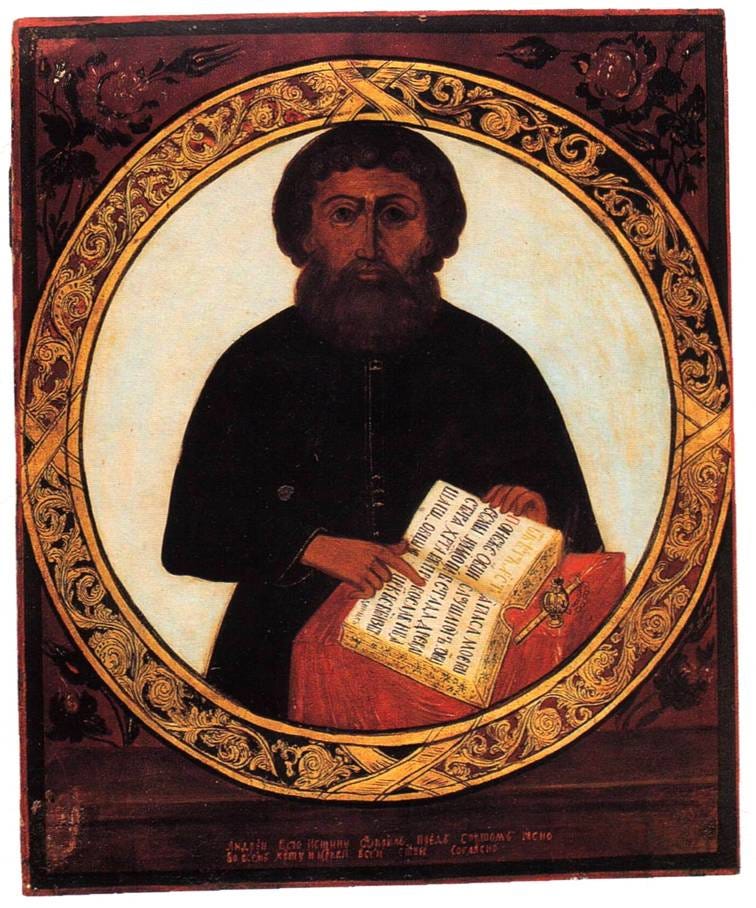
In the modern era, two great examples stand out.
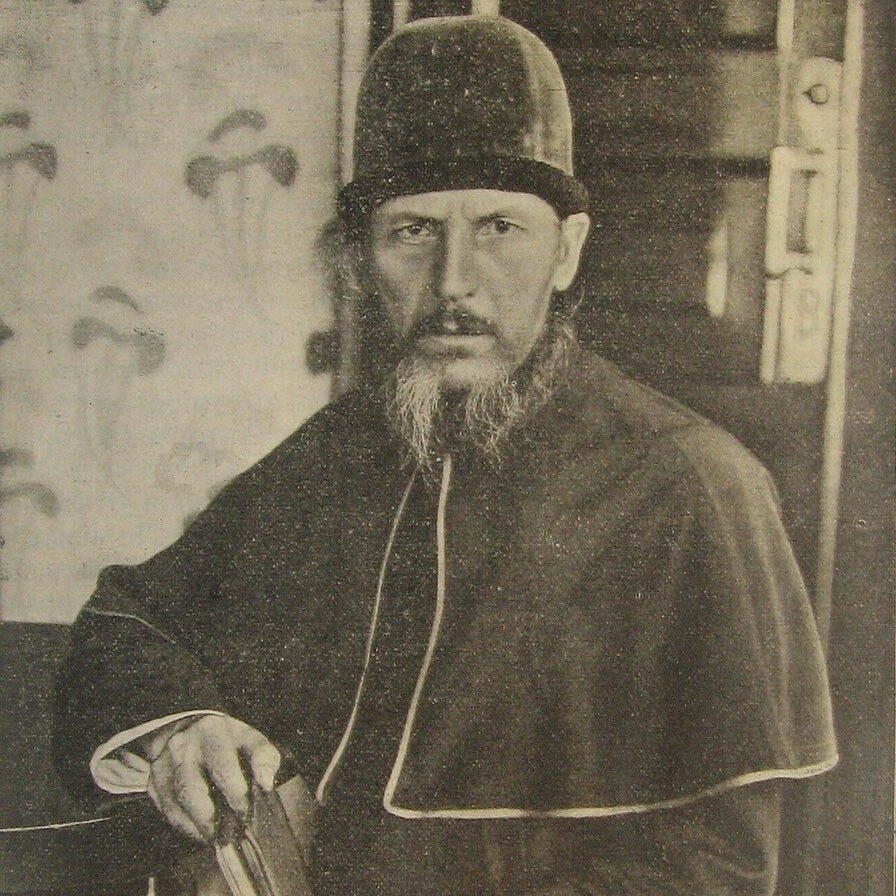
For the Belokrinitsa Hierarchy - Arseny, bishop of the Urals, was their greatest theologian, a man of remarkable depth and creativity. His work is foundational to Belokrinitsa thought. I published a few years ago his most important work, Justification of the Old Believer Church, available on Amazon.
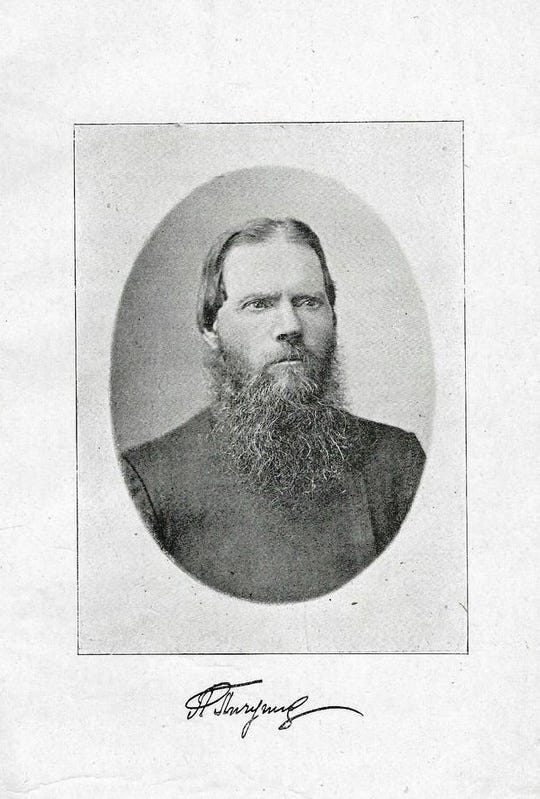
For the Pomorians, of equal stature is Lev Pichugin - as famous for his public debates held with other Old Believers and Nikonian missionaries, as for his theological contributions to Pomorian doctrine. He is thorough, unashamedly serious, and unapologetic about the Priestless faith. Several of his works can be read on our website, The Old Believers.
The Essence of Old Belief
To speak of the essence of Old Belief, in general, is difficult, since, as can be seen - much depends upon which group of Old Believers you belong to. But, I will try to identify what I see as essential.
Freedom
While it is certainly born of reaction to the persecutions and condemnation of their faith by the reformed Orthodox, the concept of freedom to worship, and to be left alone to do so, developed as a core tenet of Old Believers. There are no known cases of Old Believer settlements that persecuted non-Old Believers.
But along with freedom comes the prohibition against judgmentalism. To respect the fundamental freedom of man to follow his faith, means to refrain from judging where it stems from a different source.
This is seen today in the surprising lack of polemics directed against Christians outside of their cultural-historical sphere. This is in stark contrast to the Nikonian tradition, that has anti-Catholic polemics as an almost obsessive impulse.
For Old Believers, however, what we do not know, we cannot judge. And much of the traditions of the Western Christian world are properly beyond our experience. That much polemical ink has been spilt on Nikonianism is a reflection of its condemnation of Old Belief more than an expression that Nikonians must be defeated. Even they are free to worship as they choose.
The notion of freedom was not emphasized prior to the Schism, and in Russia, one can read in the works of Joseph Volokolamsk justifications for violence to heretics. Religious dissenters were frequently imprisoned.
The events of the Schism itself shocked the Old Believers deeply, and these actions of coercion and force were henceforeth looked upon with disgust as fundamentally un-Christian.
Virtuous Living
Perhaps a consequence of living without the Priesthood, even among the Popovtsy, was an emphasis on the severe individual responsibility that comes with answering the call to follow Christ.
For the Old Believers, the proper confession of faith was never considered to be even close to a sufficient condition to call oneself a Christian.
The choice to follow Christ, and to obey his commandments, would be manifested in the virtues one displayed.
Strictness in prayer and fasting were zealously observed, both of which Old Believers have historically upheld by standards long abandoned by their Nikonian counterparts.
Much of the pursuit of virtue was manifested in the small daily-life rules of living broadly called “piety”.
While the first Old Believers were called Zealots of Ancient Piety prior to the Schism, it was the loss, temporary or permanent, of the Priesthood, that led to the great resurgence of individual responsibility and accountability for a lived faith.
It was simply not possible to “outsource” the pursuit of virtue by participation in priestly sacraments.
To prove one’s faith, it must clearly be manifest. Strictly lived. Personally uncompromising.
Simplicity
Finally, I would mark simplicity as an essence of Old Belief.
It can be fairly said that Old Belief is a radical reaction to an apocalyptic attack. The Old Believers did not put the bulk of their energies into sophisticated theological apologies or the development of new formal doctrines.
Instead, they wished to pursue Christ in every aspect of their lives, unencumbered by the intrigues of a society that was becoming increasingly “sophisticated”.
For so many, this life demanded simple agrarian lifestyles. The pulse of daily life throbbed not with the beat of cultural pursuits or personal ambitions, but an urgent need to flee the world.
The self-imposed isolation only served to enshrine this lifestyle, and only in our time, with the ease and availability of comfortable, safe and prosperous living has this style of simple living begun to decay.
But if the decay continues, it will mean that Old Believers will have lost their connection to an essential part of their identity - simple living, voluntary poverty, humility of substance.
They will no longer be as they were for better or for worse.
I hope you found this article to be helpful.
If you have enjoyed what you read, please support us by becoming a paid subscriber, or by checking out our site, The Old Believers, and subscribing to our email list for updates, for hundreds of articles and resources about the old faith.
A decent article, but I can think of three types of Old Believers that were not mentioned.
Novozybkov Hierarchy - The "Russian Old Orthodox Church", also known as the Novozybkov Hierarchy, incorporated those Old Believer groups which refused to accept the authority of the Belokrinitskaya Hierarchy, est. 1846. Due to a current lack of leadership, Metropolitan Kornilii of the "Russian Orthodox Old-Rite Church" (with its center at Rogozhskoe Kladbishche in Moscow) now concurrently and informally holds the position of Metropolitan of the Novozybkov hierarchy, a most unusual circumstance. (This may no longer be true, so this might need to be fact-checked.)
The Chasovenny (those who worship in chapels) are ideologically tied to the Popovtsy, but in their rural environments they have had to endure being deprived of the Priesthood for so long that they have become used to and comfortable with their situation, and have in reality become a "semi-Bezpopovtsy". In their long isolation (mostly in Siberia, the Russian far east, Oregon, Alaska and Brazil), they have become so distrustful of the concept of where they hope to find a valid hierarchy, that they have essentially stopped looking for an opportunity to restore Priesthood. They have given up hope and they have given up desire and ambition for becoming part of the fullness of the Church. Moreover, their isolated lifestyle reinforces their mindset of keeping to themselves and preserving some elements of pre-Christian Russian pagan culture (the notion of "us" and "not us" / "nashi" i "ne nashi"). It has become so extreme that they refuse to even eat with or maintain friendships anyone outside their community.
The "Netovtsy" (accent on first syllable; Nay-sayers) are sort of an "end-of-the-line" product of very remote rural living (occuring mostly among the Chasovenny, especially those in the Russian far east and Alaska), where the life of extreme seclusion creates a psychological ideology of everything outside their narrow living experience being considered as "that is not allowed" (нельзя...), and everything and everyone "wordly" is considered to be "nechisty, pogony" (unclean, pagan). It's an exaggerated form of cultural xenophobia that sometimes crosses the line of irrationality. Grafted onto the Chasovenny lifestyle, it produces a type of Old Believer community that is greatly hostile to anyone outside their own communities, even including Popovtsy and other Bezpopovtsy. (Technology is likewise targeted as "forbidden".)
The Stranniki (which you have already mentioned) are somewhat tied to the cultural principles of the Chasovenny, but they are not directly associated. (It is more likely that Stranniki will emerge from Netovtsy than from any of the other "tolki" or "interpretations" of Old Belief.)
I appreciate the summary. It's very well done, in my opinion. One question: is there any way to access some of the published works through a platform other than Amazon? I live in Germany.